
Feb 20, 2024
The innovation value of broad expertise
A call-center forecasting story: when specialist methods stalled, a survival-analysis tool from another discipline unlocked the target—and why cross-functional breadth wins.
It can be difficult to communicate the value of a wide experience and knowledge base in a business ecosystem that hears "jack-of-all-trades", but only listens to "but-master-of-none". In an increasingly specialized world, the ability to bridge many disciplines is severely underrated as a skill brought to bear on siloed departments and processes.
But there's a value for wide-breadth thinking in breaking through a specialist's intractable problems. Embrace the ability to pull from other disciplines, to see problems without the strict framework of this-is-how-it's-done, those crystalized structures of habit built up by formal education and depth-first learning which are easily shattered without the flexibility of outside influence. This lies at the center of successful first-principles thinking.
When I was working with a small team of ML engineers to forecast demand mode staffing for a call center, we had built an incredible forecast and solved all the sorts of problems a team of ML engineers could solve. We dealt with unreliable data, pipeline problems, mountains of exogenous variables, and even counteracted the historic signal of understaffed periods by reconstructing simulated demand under ideal conditions. All we needed to do was know where to aim it. And that's where the problem began.
To implement the staffing model, we needed to provide a target time-to-answer. We spent a lot of time talking to customers, reading surveys, looking at sentiment analysis, and comparing CSAT scores to wait times, and the signals were all over the place. No correlation between wait times and satisfaction, and customers were inconsistent in their demands—in short, all the normal ways of finding signal were failing.
It was only when we stepped out of the trap of domain specialization and took a cross-disciplinary approach that we solved the problem. We were able to identify the Kaplan-Meier estimator, a survival analysis method most commonly used to compare drug efficacy in medical studies, to identify a sharp decrease in proportional survival (i.e., non-abandoned calls) at a specific time.
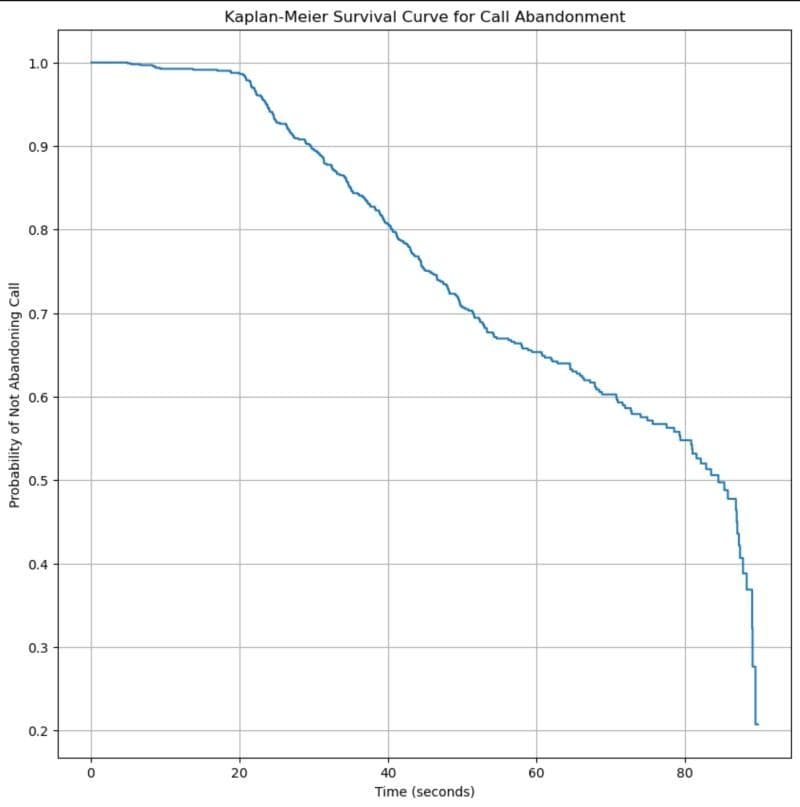
The results were a resounding success. The model was so good we were able to answer more calls, faster, with lower total staffing levels—saving money and increasing customer satisfaction at the same time. This was possible only because of our team consisted of breadth-first jack-of-all-trades who could pull on (seemingly) unrelated past experiences to inform unexpected solutions.
So dive into learning new and diverse subjects. Build experiences across departments and functions. Take pride in your ability to adapt, to build complex connections, and bring a unique perspective founded on a wide web of interconnected knowledge.
And if you ever need to justify it, throw around "cross-functional". Because hiring managers sure love their buzzwords.
Ready to align AI with how your team actually works?
Frame One helps small teams choose the right problems, design workable systems, and build habits that last—without adding unnecessary complexity.